
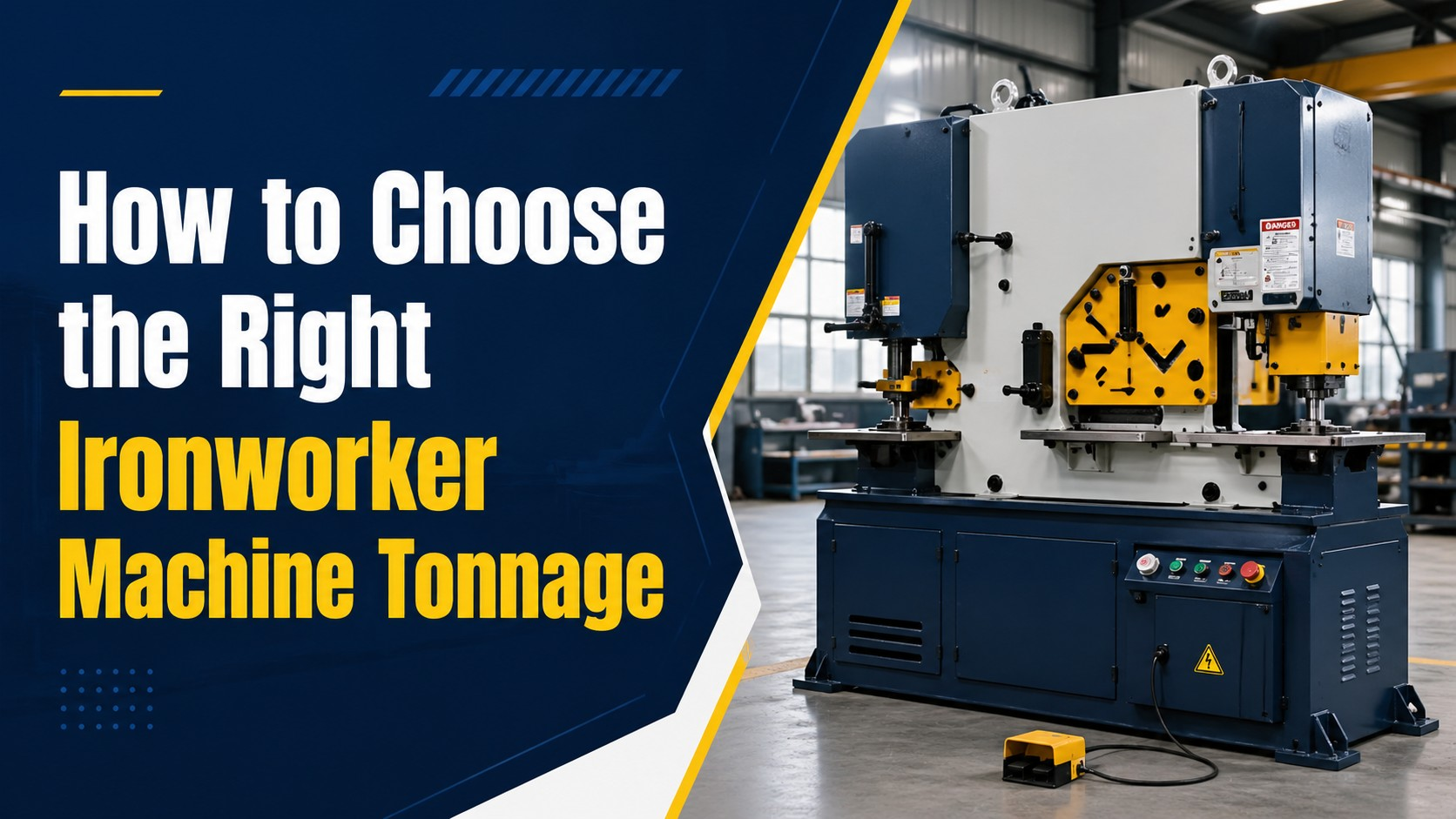
One of the most common and costly mistakes fabrication shop owners make is choosing the wrong tonnage for their ironworker machine.
Too low and the machine cannot handle your thicker materials, leading to overloaded hydraulics, premature wear on punching and shearing components, or simply being unable to do the job at all. Too high and you have spent significantly more than necessary on a machine that will spend most of its life at 30% capacity running light angle shearing and flat bar cutting jobs.
This guide walks you through how to calculate what you actually need, not what a salesperson thinks you need.
What Tonnage Actually Means
Tonnage refers to the maximum hydraulic punching pressure the machine can deliver, measured in metric tons of force. A 55–ton machine delivers 55 tonnes of force at the punch. A 220–ton machine delivers 220 tonnes at the punching station.
This matters because different materials and hole sizes require different amounts of force. The thicker the plate and the larger the hole being punched, the more force is required. The punching force depends on the diameter of the hole being punched, the thickness of the plate, and the tensile strength of the material whether mild steel, stainless steel, or aluminium. Every machine manufacturer provides punch capacity charts that make this calculation simple, and you should always refer to the chart for your specific machine before specifying a model.
HPT‘s Machine Range and What Each Handles
Hydro Power Tech Engineering manufactures hydraulic ironworker machines across eight tonnage classes, each suited to a different range of fabrication work.
HIW–55 (55 Ton)
Maximum punch capacity is 22mm diameter in 16mm plate. Flat bar shearing handles 300×12mm. Angle shearing covers 100x100x10mm. Round bar shearing handles 32mm diameter. Motor is 7.5 HP. Best for small fabrication shops, gate and grill manufacturers, and light structural work.
HIW–65 (65 Ton)
Maximum punch capacity is 22mm diameter in 20mm plate. Flat bar shearing handles 350×15mm. Angle shearing covers 130x130x13mm. Round bar 40mm. Motor is 7.5 HP. Best for general fabrication, mild structural steel, and small construction contractors.
HIW–85 (85 Ton)
Maximum punch capacity is 30mm diameter in 20mm plate. Flat bar shearing handles 460×15mm. Angle shearing covers 152x152x13mm. Round bar 50mm. Motor is 10 HP. Best for medium structural fabrication, agricultural machinery, and solar mounting structures.
HIW–110 (110 Ton)
Maximum punch capacity is 30mm diameter in 25mm plate. Flat bar shearing handles 610×16mm. Angle shearing covers 152x152x15mm. Round bar 50mm. Channel shearing up to 180mm. Motor is 10 HP. Best for construction contractors, structural steel shops, and tower component fabrication.
HIW–110 EX (110 Ton Extended)
Same punching capacity as HIW–110 with a wider flat bar shear and deeper throat configuration. Best for shops that need 110–ton power but regularly handle wider plates and larger workpieces.
HIW–135 (135 Ton)
Maximum punch capacity is 33mm diameter in 28mm plate. Flat bar shearing handles 610×18mm. Angle shearing covers 152x152x18mm. Round bar 50mm. Motor is 15 HP. Best for heavy structural fabrication, pre–engineered buildings, and railway components.
HIW–165 (165 Ton)
Maximum punch capacity is 36mm diameter in 32mm plate. Flat bar shearing handles 760×20mm. Angle shearing covers 200x200x20mm. Round bar 60mm. Motor is 20 HP. Best for large structural steel contractors and heavy infrastructure fabrication.
HIW–220 (220 Ton)
Maximum punch capacity is 40mm diameter in 38mm plate. Flat bar shearing handles 700×25mm. Angle shearing covers 200x200x20mm. Round bar 70mm. Channel shearing up to 300mm. Motor is 25 HP. Best for heavy industrial production, major infrastructure projects, and high–volume tower fabrication.
How to Figure Out Which Tonnage You Need
Follow this three–step process before contacting any hydraulic ironworker manufacturer. Step 1: List your most demanding regular punching job
What is the largest hole you regularly punch, and in what plate thickness? If you regularly punch
25mm holes in 16mm mild steel plate, that tells you something very different from punching 30mm holes in 25mm plate. Focus on what you do most and what you plan to do as your work grows into new sectors like solar or transmission towers.
Step 2: Check your shearing requirements
What is the widest flat bar you shear? What is the heaviest angle iron section you cut? What is the largest channel or bar section you need to cut? These requirements independently determine your minimum tonnage and you need to satisfy all of them simultaneously, not just the punching requirement.
Step 3: Add 20% buffer
Always select a machine that can handle your requirements at around 80% of its rated capacity. Running a hydraulic ironworker machine at 100% continuously shortens seal life, increases heat, and stresses the frame. A 20% buffer gives you room to handle occasional heavier work and ensures long machine life across the punching, shearing, and notching stations.
Common Mistakes When Choosing Tonnage
Buying for today‘s work only is the most expensive mistake. If your business is growing, buy one size up from what you need today. Upgrading machines after 18 months is expensive and disruptive to your production.
Ignoring the shearing station is another critical error. Many buyers focus entirely on punching capacity and forget that the flat bar shearing, angle shearing, and section shearing stations each have their own capacity limits. If you need to shear 200mm channel sections, your machine must be rated for that regardless of what it can punch.
Choosing a machine based on price alone means you end up with a 55–ton machine doing 85–ton work, overloaded constantly, wearing out far sooner than the cost difference between the two models ever justified.
Not sure which model fits your production? HPT‘s team can help you specify the right machine based on your actual work.
Talk to an HPT Engineer for a Free Consultation
Related Reading
Full HIW series specifications and technical data, understanding flat bar shearing capacity, section and bar shearing explained, angle shearing applications, punching applications, notching applications, hydraulic punching machines
Frequently Asked Questions
Q: What happens if I run an ironworker machine beyond its rated tonnage?
A: Overloading a hydraulic ironworker causes the hydraulic relief valve to activate, preventing machine damage but meaning the punch will not complete its stroke. Repeated overloading wears seals faster and stresses the frame, shortening the life of both the punching station and the shearing stations significantly.
Q: Can I upgrade the tonnage of my machine later?
A: No. The frame, cylinder, and hydraulic system are matched to a specific tonnage class on every hydraulic ironworker machine. You cannot upgrade an existing machine‘s tonnage. The only option is to purchase a higher–tonnage machine when your requirements outgrow your current model.
Q: Is a heavier–tonnage machine always slower?
A: Not necessarily. Cycle speed depends on stroke length and hydraulic pump flow rate. Some heavy ironworker machines actually punch faster than lighter ones because of larger pump capacity. Always check the cycles–per–minute specification at the punching station, not just the tonnage rating.
The Role of Throat Depth in Your Decision
Beyond tonnage, throat depth is the second most important specification to get right when selecting a hydraulic ironworker machine. A machine that can punch 30mm holes in 25mm plate but has a 310mm throat can only reach 310mm from the plate edge. If your work involves punching holes near the centre of wide plates such as 600mm–wide base plates for solar mounting structures or pre–engineered buildings, you need the SD configuration with 510mm throat or the XD with 760mm throat.
The HPT HIW series is available in both S and SD configurations for most models. Review your current job log and identify the furthest–from–edge hole position you regularly punch. That measurement directly determines your minimum required throat depth. Discuss this specifically with your ironworker machine manufacturer when requesting a quote.
Planning for Production Growth
A common regret among fabrication shop owners is buying an ironworker machine for their current work volume only to outgrow it within 18 to 24 months as their business grows.
Ironworker machines are not easily upgraded in terms of tonnage, so the price difference between a 65–ton and an 85–ton machine is much smaller than the cost of replacing a machine before it has fully paid for itself.
Think specifically about where your business could be in three years. If there is any realistic chance you will be doing heavier structural work for solar projects, transmission tower components, pre–engineered buildings, or construction infrastructure, factor those material sizes into your ironworker machine specification now rather than later.
Getting a Specification Quote Right
When requesting a quote for an ironworker machine from any hydraulic machine manufacturer, provide your maximum hole diameter and plate thickness for punching, maximum flat bar width and thickness, maximum angle section size, maximum round bar or square bar diameter, whether you need channel or I–beam shearing and the section size, whether you need throat depths greater than 310mm, your monthly production volume, and any optional tooling such as
press brake, angle bending, or notching attachments. A manufacturer who asks all these questions before recommending a model is a manufacturer worth trusting.