
In today’s competitive manufacturing landscape, the ability to shape, bend, and form metal with precision is not just an advantage. It is a necessity. From massive structural steel frameworks to precision component assemblies, hydraulic bending sits at the heart of modern industrial fabrication. Whether you run a small fabrication workshop or manage a large-scale production facility, understanding how hydraulic bending works and why the right machine matters can transform your output quality, throughput, and bottom line.
At HPT Ironworker, we are not just suppliers. We are manufacturers of hydraulic bending machines and ironworker machines, designing and building every unit from the ground up at our facility in Gujarat, India. This guide covers everything you need to know about hydraulic bending, the technology behind it, its applications across industries, and why choosing the right hydraulic bending machine is one of the most important investments your business can make.
What Is Hydraulic Bending and Why Does It Matter?
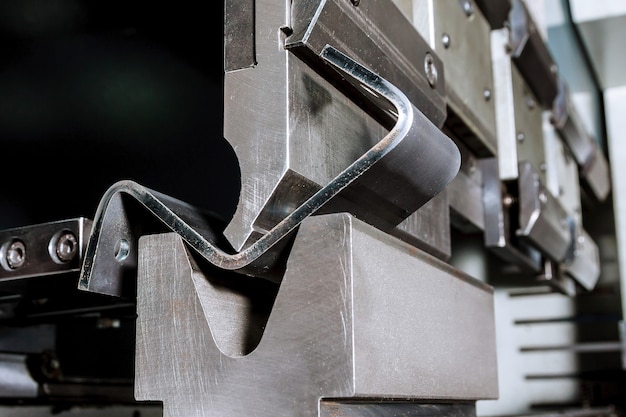
Hydraulic bending is the process of applying controlled hydraulic force to deform metal into a desired angle, curve, or profile. Unlike mechanical bending methods that rely on direct physical leverage, hydraulic bending uses pressurized fluid to generate and transmit force with exceptional precision and consistency. The result is clean, accurate bends that maintain the structural integrity of the material being worked.
The importance of hydraulic bending in modern industrial fabrication cannot be overstated. Metal fabrication underpins virtually every major industry, including construction, infrastructure, automotive, heavy machinery, and energy. In each of these sectors, components must meet tight dimensional tolerances, withstand heavy operational loads, and fit together perfectly during assembly. Hydraulic bending delivers the accuracy and repeatability that these demands require.
Where older bending methods often introduced inconsistencies or material fatigue, hydraulic systems distribute force uniformly across the entire bending zone. This reduces the risk of cracking, warping, or surface damage, particularly when working with high-strength steels and thick sections that are common in structural and industrial applications.
The Technology Behind a Hydraulic Bending Machine
A hydraulic bending machine works by converting hydraulic pressure into mechanical force through a cylinder and ram assembly. When the operator activates the system, hydraulic fluid is pumped into the cylinder, driving the ram downward or forward with controlled, measurable force. This force is applied to the workpiece through precision tooling, bending the material to the programmed or set angle.
The key components of a high-quality hydraulic bending machine include a rigid welded steel frame that resists deflection under load, a high-capacity hydraulic power unit with reliable pump and valve systems, precision-machined tooling interfaces that ensure accurate force transfer, and operator controls that allow fine adjustment of pressure, stroke depth, and speed. At HPT Ironworker, every hydraulic bending machine we manufacture is built with these principles at its core.
Frame rigidity is one of the most important factors in hydraulic bending machine performance. A frame that flexes or deflects under load introduces errors into the bending angle and compromises repeatability. Our engineering team designs frames that remain stable under full operational loads, shift after shift, ensuring that the first bend of the day and the thousandth bend are equally accurate.
The hydraulic system itself must provide smooth, controllable force delivery. Pressure spikes, flow irregularities, or valve inconsistencies can all affect bend quality. HPT Ironworker uses high-grade hydraulic components that deliver consistent performance and long service life, even in demanding production environments.
Hydraulic Press Bending Machine: The Industrial Fabrication Standard
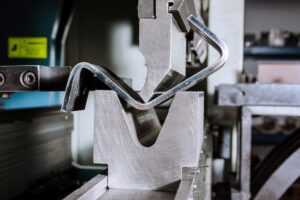
Among the different types of bending equipment available, the hydraulic press bending machine stands out as the most versatile and widely used in industrial fabrication. A hydraulic press bending machine uses a hydraulic press mechanism to apply downward force through a punch onto a workpiece supported by a die. By varying the punch geometry, die opening, and press depth, fabricators can produce a wide range of bend angles and profiles from a single machine.
The hydraulic press bending machine is particularly valued for its ability to handle thick and high-strength materials that would be beyond the capacity of lighter mechanical equipment. In structural steel fabrication, for example, it is common to need bends in flat bars, angle iron, square sections, and plate steel of varying thicknesses. A well-built hydraulic press bending machine handles all of these tasks with equal precision.
As a manufacturer, HPT Ironworker designs hydraulic press-bending machines that are integrated directly into our ironworker machine platforms. This integration means that a single machine can handle punching, shearing, notching, and bending operations, dramatically reducing the footprint, equipment investment, and workflow complexity for fabrication businesses.
Ironworker Machines and Hydraulic Bending: A Natural Partnership
Ironworker machines are the workhorses of modern industrial fabrication. A single ironworker machine can perform multiple metalworking operations using interchangeable tooling stations, all driven by a central hydraulic power unit. Common operations include hole punching, angle shearing, flat bar and section shearing, notching, and, when equipped with the appropriate tooling, hydraulic bending.
The integration of hydraulic bending capability into ironworker machines represents one of the most significant productivity advances in fabrication. Instead of moving workpieces between separate machines for different operations, operators can complete the entire processing sequence at a single station. This reduces handling time, minimises the risk of dimensional errors introduced during transfer, and speeds up overall production cycles.
At HPT Ironworker, we manufacture ironworker machines across a range of capacities and configurations, from compact units suited to light fabrication work to heavy-duty machines capable of processing large structural steel sections. All of our ironworker machines are built on the same foundation of robust hydraulic engineering, precision tooling compatibility, and long-term reliability that defines the HPT brand.
The combination of punching, shearing, notching, and hydraulic bending in a single ironworker machine gives fabricators an all-in-one solution that reduces capital expenditure, floor space requirements, and maintenance complexity compared to maintaining multiple separate machines for each operation.
Applications of Hydraulic Bending Across Industries
The versatility of hydraulic bending makes it essential across a wide range of industries. Here are the most critical application areas:
Construction and Structural Steel
In construction, hydraulic bending is used to form the structural elements that support buildings, bridges, industrial facilities, and infrastructure. Steel frames, column bases, beam connections, and support brackets all require precise bending to ensure that structural loads are transferred correctly. The ability to produce consistent, accurate bends in high-strength steel is critical here, where dimensional errors can have serious safety consequences.
Infrastructure and Civil Engineering
Bridges, tunnels, highways, and utility installations all rely heavily on fabricated steel components produced using hydraulic bending. Custom profiles, curved sections, and precisely angled brackets are common requirements. The ability of hydraulic bending systems to handle large and heavy sections makes them particularly suited to infrastructure fabrication where standard profiles may not meet project specifications.
Heavy Machinery Manufacturing
The production of industrial machinery involves hundreds of fabricated components, from large structural frames to small precision brackets and guards. Hydraulic bending enables manufacturers to produce these components to exact specifications, ensuring correct assembly fit and the mechanical performance required for heavy-duty service conditions. Consistent bending quality also reduces rework and assembly complications on the production line.
Automotive and Transport Equipment
Chassis components, body structural elements, trailer frames, and mounting brackets are all produced using hydraulic bending in the automotive and transport sectors. The need for tight dimensional tolerances, high production volumes, and consistent material quality makes hydraulic bending the preferred method. Hydraulic press bending machines are particularly common in this sector due to their ability to handle diverse materials and profiles efficiently.
General Fabrication and Custom Work
Beyond specific industries, hydraulic bending is a fundamental capability for any general fabrication workshop. Whether producing safety railings, industrial shelving, equipment enclosures, gate components, or custom architectural metalwork, hydraulic bending provides the precision and flexibility that fabricators need to meet the demands of diverse customer requirements.
Why Choose HPT Ironworker as Your Hydraulic Bending Machine Manufacturer?
Choosing the right manufacturer for your hydraulic bending machine is as important as choosing the right machine specification. A machine is only as good as the engineering behind it, the quality of its components, and the support available after purchase. At HPT Ironworker, we bring all three together as a dedicated manufacturer with decades of experience in hydraulic fabrication equipment.
As manufacturers, we control every stage of the production process. From design and material selection to machining, assembly, and final testing, each HPT Ironworker machine is built to our exacting standards before it leaves our facility. This end-to-end manufacturing approach allows us to maintain quality at every step and respond quickly when customers need technical support or spare parts.
Key reasons to choose HPT Ironworker as your hydraulic bending machine manufacturer:
- Manufacturer-Direct Quality: Every machine is designed and built by us, with no compromise on materials or components.
- Wide Capacity Range: From compact ironworker machines for light fabrication to heavy-duty models for structural steel work, our range covers every requirement.
- Integrated Bending and Processing: Our ironworker machines combine hydraulic bending with punching, shearing, and notching in a single platform for maximum productivity.
- Global Supply Network: We supply fabrication businesses in markets worldwide, backed by an established distributor and support network.
- Long-Term Reliability: Our machines are engineered for extended service life in demanding industrial environments, reducing total cost of ownership.
- Deep Technical Expertise: As manufacturers, we have thorough technical knowledge of every machine we produce and can provide informed guidance on machine selection, tooling, and application requirements.
Key Factors to Consider When Selecting a Hydraulic Bending Machine
Selecting the right hydraulic bending machine for your operation requires careful consideration of several factors. Getting this decision right ensures that the machine you invest in will meet your current requirements and scale with your business as it grows.
Tonnage and Bending Capacity
The tonnage of a hydraulic bending machine determines the maximum force it can apply during bending. This directly limits the material thickness and width that the machine can process. When selecting a machine, always choose a capacity that comfortably handles the heaviest and widest material you regularly work with, plus headroom for heavier occasional jobs.
Material Type and Grade
Different materials require different bending forces. High-strength steels, stainless steel, and hardened alloys require significantly more force to bend than mild steel of equivalent dimensions. Ensure that the hydraulic bending machine you select is rated for the material grades you work with, not just the physical dimensions.
Production Volume and Cycle Requirements
For high-volume production, machine speed and cycle efficiency are critical. Look for hydraulic systems that provide fast return speeds, quick tooling changes, and consistent cycle times. For lower-volume or custom work, flexibility and tooling versatility may be more important than raw cycle speed.
Integration with Other Fabrication Operations
If your fabrication workflow includes punching, shearing, and notching alongside hydraulic bending, consider an integrated ironworker machine that combines all these capabilities. This approach reduces handling, improves workflow efficiency, and lowers overall equipment investment compared to purchasing separate dedicated machines for each operation.
The Future of Hydraulic Bending in Modern Industrial Fabrication
Modern industrial fabrication continues to evolve rapidly. Tighter tolerances, more complex geometries, higher-strength materials, and increasing demands for production efficiency are all pushing fabrication technology forward. Hydraulic bending remains central to this evolution, but the machines delivering it are becoming more capable, more precise, and more integrated with digital production systems.
At HPT Ironworker, we invest in ongoing development of our hydraulic bending machine range to stay ahead of these demands. Our engineering team works closely with fabrication customers across industries to understand their evolving requirements and translate those insights into machine designs that deliver real operational advantages.
The integration of ironworker machines with hydraulic bending capability is itself a reflection of this forward-thinking approach. By combining multiple fabrication functions in a single hydraulic platform, we provide fabricators with solutions that improve efficiency today while giving them the capacity to take on more complex and demanding work as their businesses grow.
Hydraulic bending is not just a process. It is the foundation of quality fabrication. As long as industries continue to build, manufacture, and create with steel and metal, the demand for precise, reliable hydraulic bending solutions will continue to grow. Businesses that invest in the right hydraulic bending machine today are positioning themselves to meet that demand with confidence.
Invest in the Right Hydraulic Bending Solution
Hydraulic Bending Solution
Hydraulic bending is an essential capability for any serious fabrication operation. Whether you need a standalone hydraulic press bending machine or an integrated ironworker machine with full hydraulic bending capability, the quality of your equipment directly determines the quality and consistency of your output.
As a manufacturer with a proven track record in hydraulic bending machines and ironworker machines, HPT Ironworker brings engineering expertise, manufacturing quality, and application knowledge together in every machine we produce. Our solutions are designed for the real demands of modern industrial fabrication, built to perform shift after shift, year after year.
If you are looking for a hydraulic bending machine that delivers precision, durability, and long-term value, we invite you to explore the HPT Ironworker range. Contact our team today to discuss your fabrication requirements and discover how our machines can improve your productivity, quality, and competitiveness.