
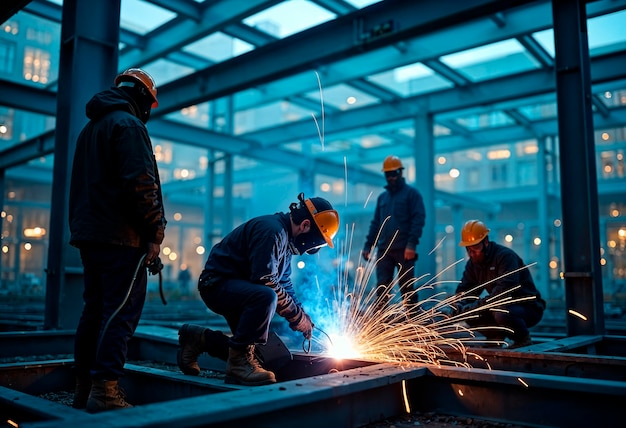
Solar energy projects are often evaluated based on panel efficiency, inverter quality, and power output. However, in real-world execution, one factor determines whether a solar plant performs reliably for 25 years or struggles within a few seasons with the solar mounting structure. These structures form the mechanical backbone of every solar installation, and their quality depends entirely on how they are fabricated.
This is where ironworker machines, punching machines, and CNC punching machines play a critical role. They are used extensively in the fabrication process of solar mounting structures, long before the panels reach the installation site. Without these machines, modern solar EPC projects, both rooftop and utility-scale, would face serious challenges in accuracy, speed, safety, and long-term performance.
This article explains, from A to Z, how ironworker machines are used in solar installation projects, how punching and processing machines support solar structure fabrication, and why these machines have become essential in the solar industry.
Understanding the Solar Installation Process from a Fabrication Perspective
To clearly align intent, it is important to understand where fabrication fits into the solar installation process.
A typical solar EPC workflow includes:
- Site survey and feasibility analysis
- Structural and load design of solar mounting systems
- Solar mounting structure fabrication
- Galvanizing
- Transportation to the site
- On-site solar installation and panel mounting
- Electrical commissioning and grid synchronization
Ironworker machines and metal fabrication machines are used entirely in Step 3, during the manufacturing of solar mounting structures. They are not installation tools; they are fabrication machines used by solar structure manufacturers and suppliers.
What Are Solar Mounting Structures and Why Fabrication Quality Matters?
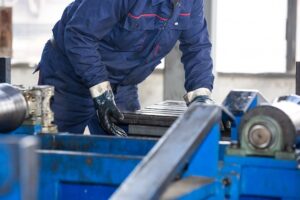
Solar Mounting Structures
Solar mounting structures are engineered frameworks designed to hold photovoltaic panels at a fixed angle for decades. These structures must withstand:
- High wind loads
- Panel dead weight
- Thermal expansion and contraction
- Rain, humidity, and corrosion
- Continuous vibration over long periods
Common materials used in solar structure fabrication include:
- Mild steel
- Galvanized iron
- Structural steel sections
These materials are converted into components such as:
- Solar mounting rails
- Vertical support posts
- Angle frames
- Base plates
- Brackets and clamps
The solar mounting structure fabrication process demands dimensional accuracy because all components are modular. Any inconsistency during fabrication multiplies across the entire solar plant, affecting installation accuracy and long-term performance.
Why Manual Fabrication Is Not Suitable for Modern Solar Projects
In earlier solar projects, manual drilling, cutting, and bending were sometimes used. Today, this approach is no longer viable.
Manual fabrication results in:
- Inconsistent hole spacing
- Uneven angles
- Weak edges caused by drilling
- Alignment problems during installation
- Increased on-site corrections
For large solar EPC projects, these issues lead to:
- Installation delays
- Higher labor costs
- Structural instability
- Warranty and compliance risks
This is why ironworker machines for solar installation projects have become a standard requirement in professional fabrication units.
Ironworker Machines in Solar Mounting Structure Fabrication
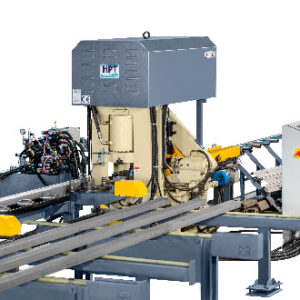
Hydraulic Ironworker Machines
Ironworker machines are among the most widely used metal fabrication machines for solar mounting structures. Their popularity comes from their ability to perform multiple operations from a single platform.
Operations Performed by Ironworker Machines in Solar Fabrication
Ironworker machines are used for:
- Punching holes in steel sections
- Shearing angles, flats, and channels
- Notching for structural joints
Because solar projects involve repetitive fabrication of similar components, ironworker machines provide the speed and repeatability required for large-scale production.
Punching Machines for Solar Mounting Structures
Punching is the most critical operation in solar structure fabrication. Punching machines for solar mounting structures are used to create precise holes and slots required for assembly.
Punching Operations in Solar Fabrication
Punching operations are used to create:
- Bolt holes in solar mounting rails
- Anchor holes in base plates
- Slots for adjustable panel alignment
- Fastener holes in clamps and brackets
Punching vs Drilling in Solar Fabrication
Punching is preferred over drilling because:
- It preserves material strength
- Hole size and spacing remain uniform
- Production speed is significantly higher
- There is a minimal heat-affected zone
- Structural fatigue resistance is better
In utility-scale solar projects, where thousands of identical holes are required, punching machines ensure consistency across the entire solar plant.
Role of CNC Punching Machines in Utility-Scale Solar Projects
For large solar parks, CNC punching machines are often used in conjunction with ironworker machines.
CNC punching machines enable:
- Automated hole patterns
- Zero variation between batches
- Reduced dependence on operator skill
This is particularly important in phased solar installations, where components fabricated months apart must still align perfectly on site.
Shearing Operations in Solar Structure Fabrication
Ironworker machines are also used for shearing steel sections used in solar mounting systems. Shearing is used to cut:
- Angle sections for frames
- Flat bars for clamps
- Channels for solar rails
Accurate shearing ensures:
- Square and clean edges
- Precise component length
- Minimal material wastage
- Faster on-site assembly
This directly improves efficiency in both rooftop and ground-mounted solar installation projects.
Notching Operations for Structural Accuracy
Notching allows different components of a solar mounting structure to fit together without interference. Notching is used to:
- Create flush intersections
- Allow cross-members to sit correctly
- Reduce excessive welding
Proper notching improves load transfer, which is critical in solar plants exposed to high wind uplift and dynamic forces.
Solar Mounting Structure Manufacturers and Steel Processing Machines
Solar mounting structures require specialized steel structure fabrication machinery to ensure the highest quality and performance. Solar structure fabrication machines are used to process and shape steel components for solar structures efficiently.
Machines used in the process include:
- Structural steel processing machines
- Solar mounting steel processing machines
These machines are crucial in ensuring that every component of the solar mounting system meets precise standards, reducing errors and ensuring fast installation once the components reach the site.
Importance of Structural Accuracy in Solar Installations
Proper structural accuracy is critical in ensuring solar panels are mounted securely and can withstand external forces such as high winds and vibrations. Accurate solar structure fabrication machines guarantee:
- Load-bearing capacity
- Longevity of solar structures
- Minimal on-site corrections
How Fabrication Machines Reduce On-Site Solar Installation Time
One of the biggest advantages of machine-fabricated solar mounting structures is reduced installation time. Because components arrive on-site:
- Pre-cut
- Pre-punched
- Pre-notched
Installers only need to assemble and bolt components together. This leads to:
- Faster solar installation
- Lower labor costs
- Fewer alignment errors
- Predictable project timelines
For EPC contractors, this efficiency directly impacts project profitability.
Quality Control and Safety in Solar Structure Fabrication
Solar projects are long-term infrastructure assets. Structural failures are not acceptable. Using ironworker machines, punching machines, and steel structure fabrication machinery ensures:
- Dimensional accuracy
- Consistent mechanical performance
- Easier inspection and certification
- Compliance with engineering drawings
This is why experienced solar EPC companies prefer suppliers with proper solar mounting structure fabrication capabilities.
Utility-Scale vs Rooftop Solar Fabrication Requirements
Utility-Scale Solar Projects
- High-volume production
- Standardized components
- CNC punching integration
- High-throughput fabrication
Rooftop Solar Projects
- Customized bending
- Smaller batch sizes
- Flexible fabrication workflows
Both segments rely on the same core machines but apply them differently.
Why Solar EPCs Trust Machine-Fabricated Structures
From real industry procurement behavior, solar EPCs trust machine-fabricated structures because they:
- Reduce installation risk
- Improve structural consistency
- Minimize rework
- Support long-term warranties
This trust is built through performance, not marketing claims.
Long-Term Performance and Lifecycle Value of Solar Structures
Solar plants are designed to operate for 20 to 25 years. Structural performance over this period depends heavily on fabrication quality. Machine-fabricated components provide:
- Uniform galvanizing after fabrication
- Better corrosion resistance
- Stable load distribution
- Lower maintenance requirements
This directly improves lifecycle return on investment for solar projects.
Future of Solar Fabrication and Metalworking Machines
As global solar capacity continues to grow, demand for:
- Faster fabrication
- Higher precision
- Automation and CNC integration
will increase. Ironworker machines, punching machines, and steel structure fabrication machinery will remain central to solar infrastructure development.
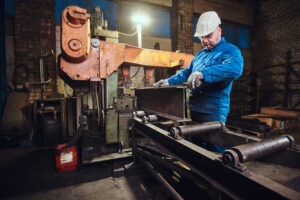
Future of Solar Fabrication
Final Conclusion: Machines That Make Solar Installation Reliable
Solar panels generate electricity, but fabricated metal structures ensure that generation continues reliably for decades. Ironworker machines, punching machines, and CNC punching systems provide the accuracy, strength, and repeatability required for modern solar installation projects.
For solar fabricators, EPC contractors, and infrastructure developers, understanding the role of these machines is essential, not optional.