
Hydraulic Bending Machine: All-in-One Solution for Fabrications
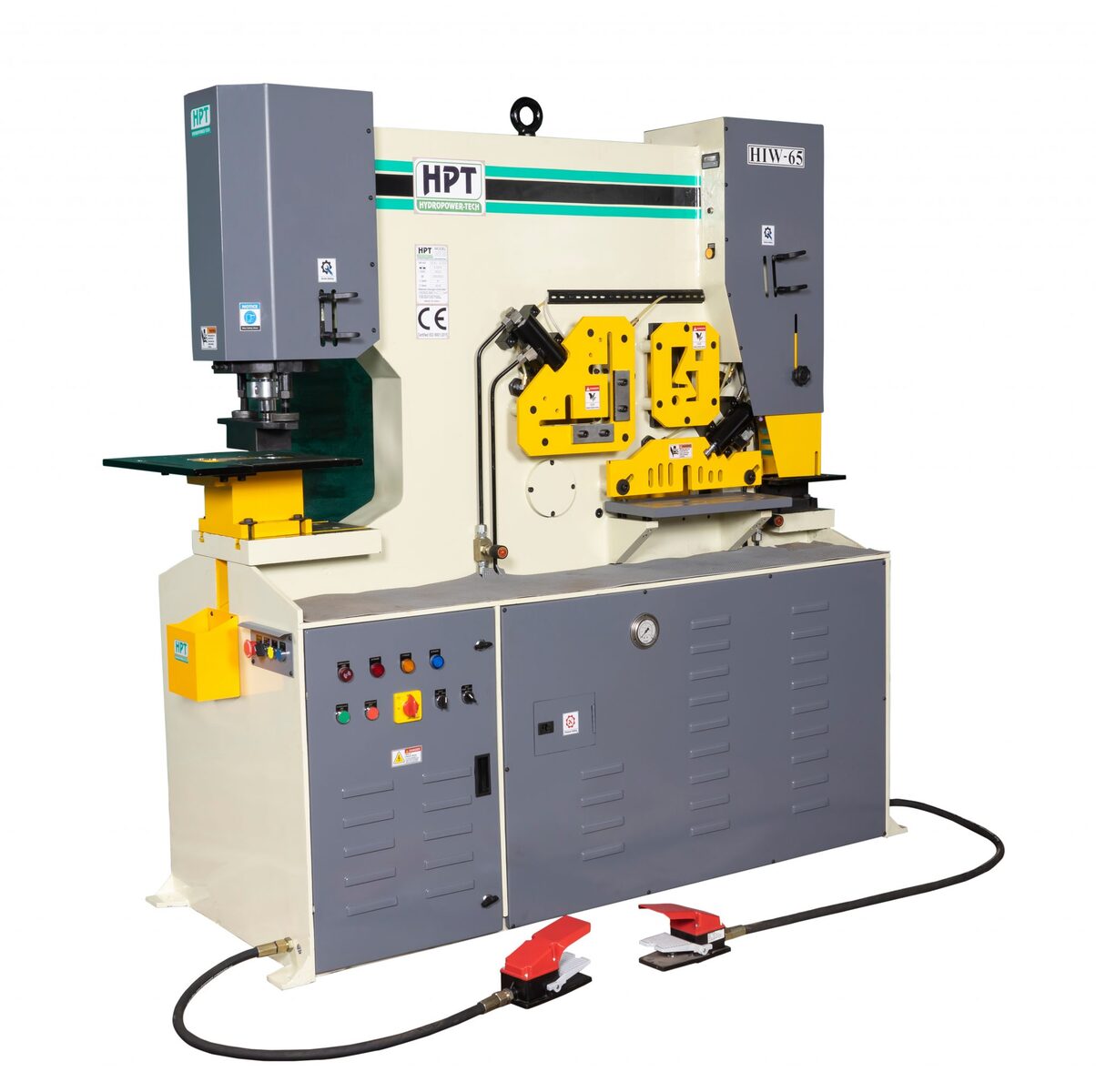
Hydraulic Bending for Industrial Fabrication Applications
Hydraulic bending plays a crucial role in modern industrial fabrication by enabling the precise and repeatable bending of metal components used in structural, construction, and manufacturing industries. From shaping flat metal sheets to forming angles, frames, and custom profiles, hydraulic bending operations are essential for producing components that meet precise dimensional and strength requirements. As fabrication demands continue to grow, industries require reliable processes capable of handling heavy-duty operations while maintaining production efficiency and accuracy.
HPT Ironworker integrates hydraulic bending as a core part of the process, offering solutions that support high-load operations, long service life, and consistent performance. Our process combines ironworker machines and hydraulic bending, ensuring that the final components meet the highest standards for precision and durability. This integrated approach meets the expectations of fabrication professionals who prioritize quality, durability, and productivity.
Hydraulic Bending Process: Precision and Reliability
The hydraulic bending process is designed to handle continuous workloads where strength, control, and operational stability are critical. Unlike light-duty equipment, hydraulic bending systems are engineered with reinforced structures, high-quality hydraulic components, and precision-machined tooling interfaces. These systems are capable of bending various metal sections with accuracy while maintaining alignment and repeatability throughout production cycles.
HPT Ironworker integrates hydraulic bending with ironworker machines to offer robust construction and operational efficiency. Each system is developed with attention to frame rigidity, load-bearing capacity, and operator control. This ensures smooth hydraulic bending operations even when processing thick or high-strength materials commonly used in industrial fabrication.
Our engineering approach emphasizes performance consistency, making our integrated ironworker machine and hydraulic bending system suitable for workshops and production facilities that require dependable capabilities across multiple shifts.
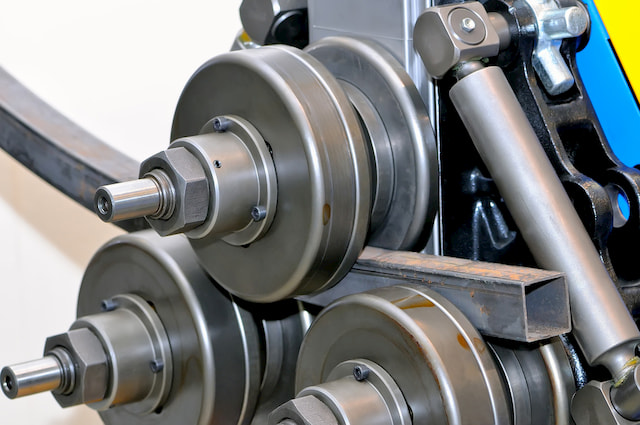
Hydraulic Bending for Controlled and Accurate Forming
A hydraulic bending process uses hydraulic force to apply controlled pressure during bending operations. This method allows precise control over bending angles and minimizes material stress, resulting in clean bends with reduced risk of deformation or cracking. The hydraulic system also provides uniform force distribution, making it ideal for handling different metal thicknesses and profiles.
HPT Ironworker integrates advanced hydraulic systems that deliver smooth operation and accurate control. The hydraulic design ensures stable bending performance, allowing operators to achieve consistent results even during complex fabrication tasks. This controlled bending capability is especially important in applications where accuracy directly impacts structural integrity and assembly fitment.
By focusing on efficient hydraulic bending performance, HPT Ironworker supports productivity while maintaining the quality standards required in industrial environments.
If you have any specific questions or need more information related to manufacturing
Hydraulic Ironworker Machines, feel free to ask!
Quality and Structural Integrity in Hydraulic Bending
The performance of hydraulic bending is directly linked to the structural integrity of the components being fabricated. A rigid frame minimizes deflection during bending operations, ensuring accurate force transfer and consistent results. High-quality materials and precision fabrication techniques contribute to machine stability and longevity.
HPT Ironworker emphasizes structural integrity in every hydraulic bending system. The machine’s frame is engineered to withstand industrial loads while maintaining alignment and balance. This design approach reduces vibration, improves accuracy, and enhances operator confidence during operation.
Strong structural design also contributes to long service life, allowing hydraulic bending systems to perform reliably over extended periods with minimal performance degradation.